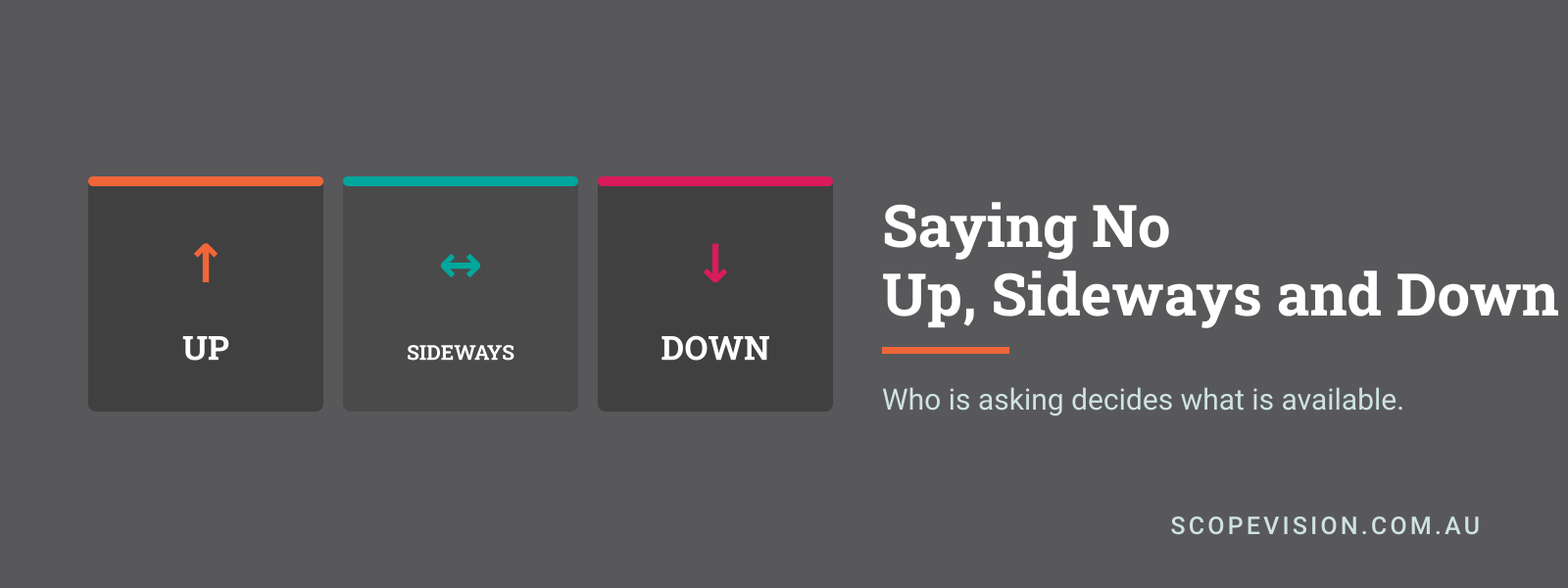
Most advice about saying no is written for people who can. As a frontline leader, you often cannot, and pretending otherwise is why the advice never sticks.
Originally published May 2016. Rewritten August 2026.
You said yes again on Tuesday. Not because you had capacity, but because the person asking outranked you, or because saying no would have taken a longer conversation than doing the work.
The guilt, first, because it is what stops you
It arrives afterwards and it sounds like a question about what people will think. They will think I am not a team player. They will stop asking me.
Turn it around. When somebody declines your request, do you think less of them? Almost nobody does. You find someone else and the whole thing is forgotten by Thursday.
The guilt is real. The consequence is smaller than the guilt suggests, and it never shrinks by waiting.
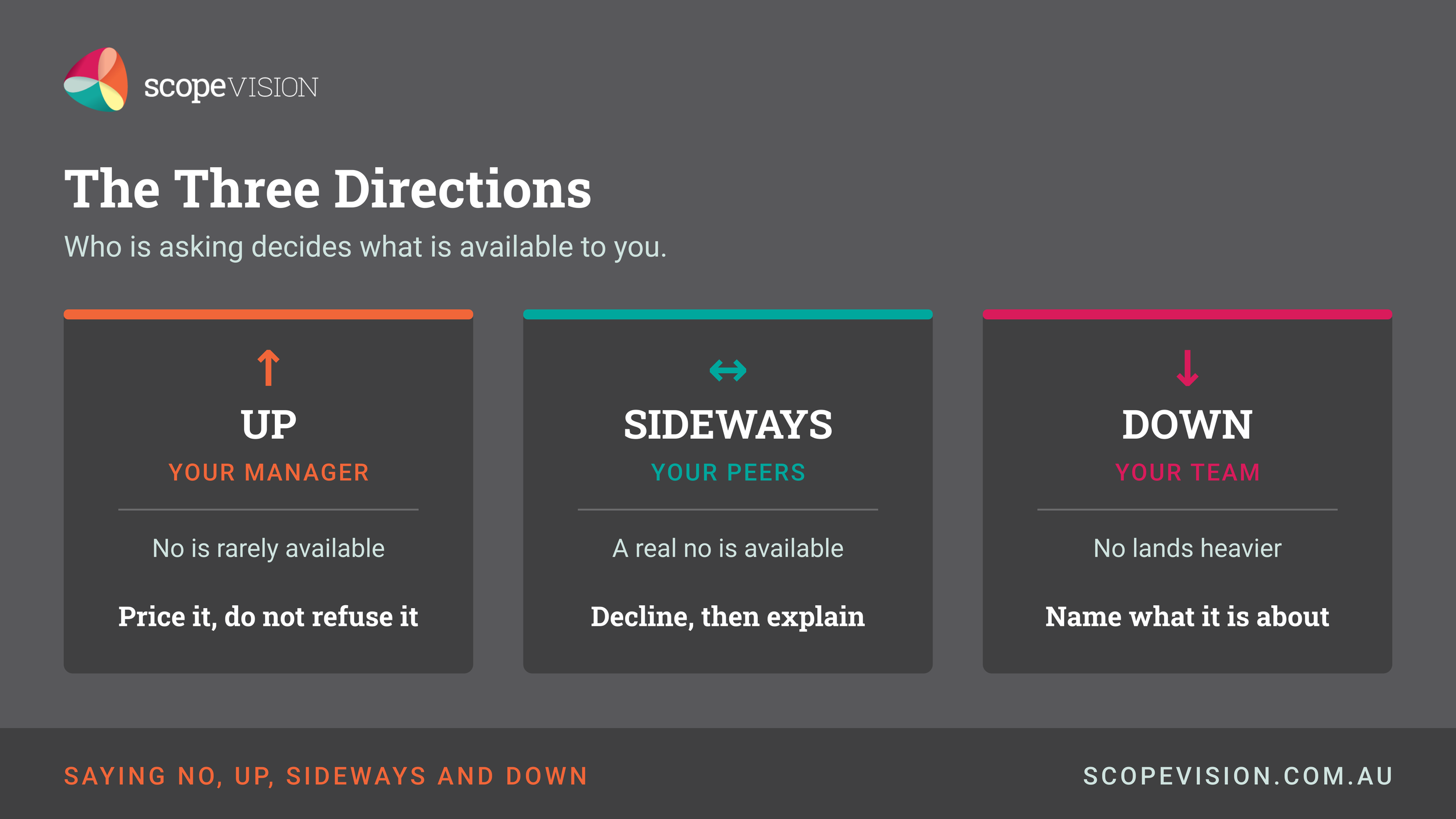
The Three Directions
Saying no to your manager, your peer and your own team member are three different conversations, and only one of them is about the word no.
Up: you are not refusing, you are pricing
When the request comes from above, no is usually not on the table. Something else is.
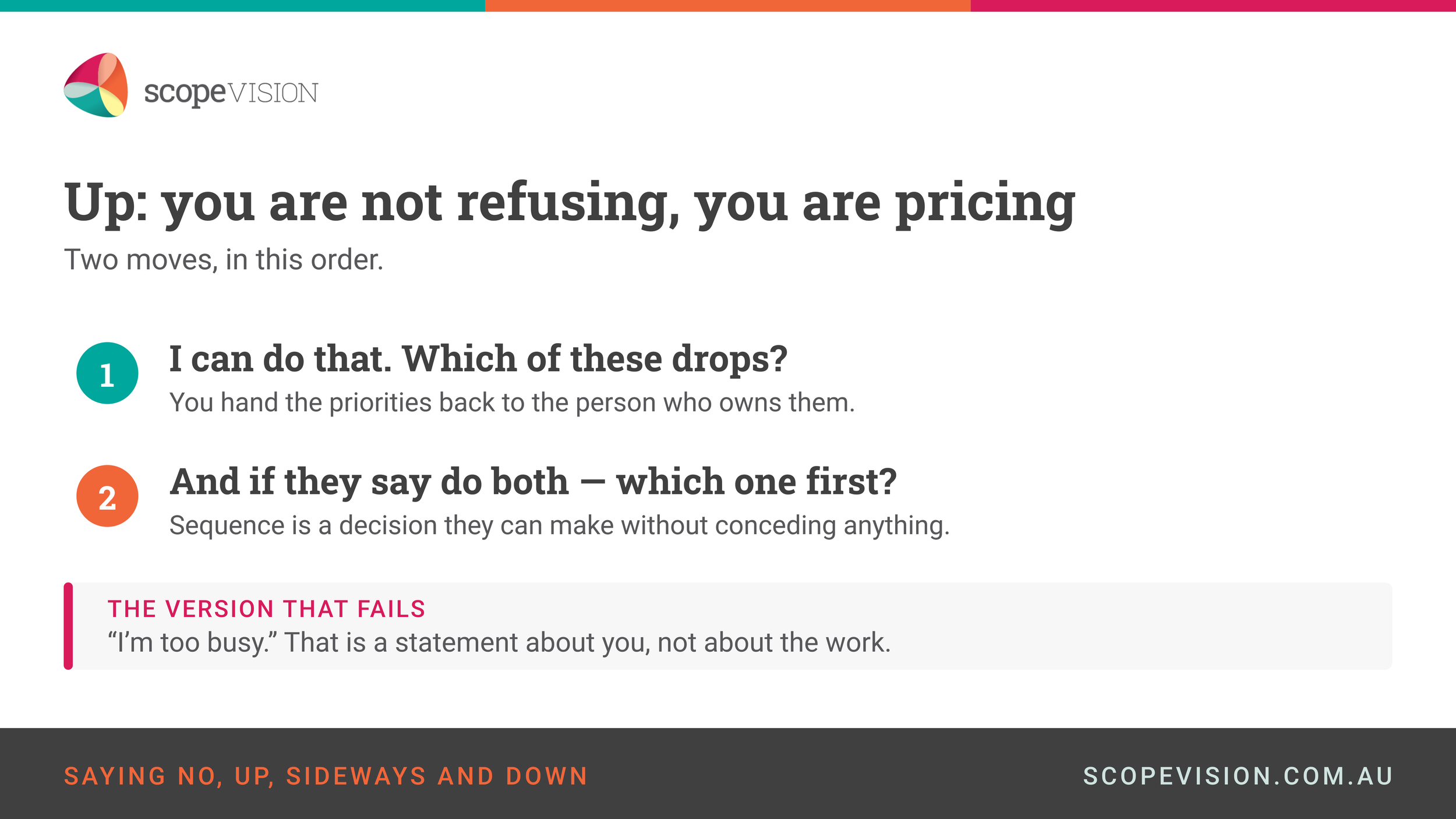
I can do that. Which of these drops?
That hands the decision back to the person who owns the priorities, which is where it belongs. You are not resisting. You are telling them the truth: the week is full and something has to move.
And when they say do both, which is what happens in the rooms that need this article most, ask which one they want first. Sequence is a decision a manager can make without conceding anything, and it gets you the same information. If the answer to that is also both, you now know something useful about where you work, and you have it on the record.
The version that fails is “I’m too busy.” That is a statement about you. Which drops is a statement about the work.
Sideways: this is where no actually lives
Peers are where a genuine no is both possible and necessary, and where most people go soft.
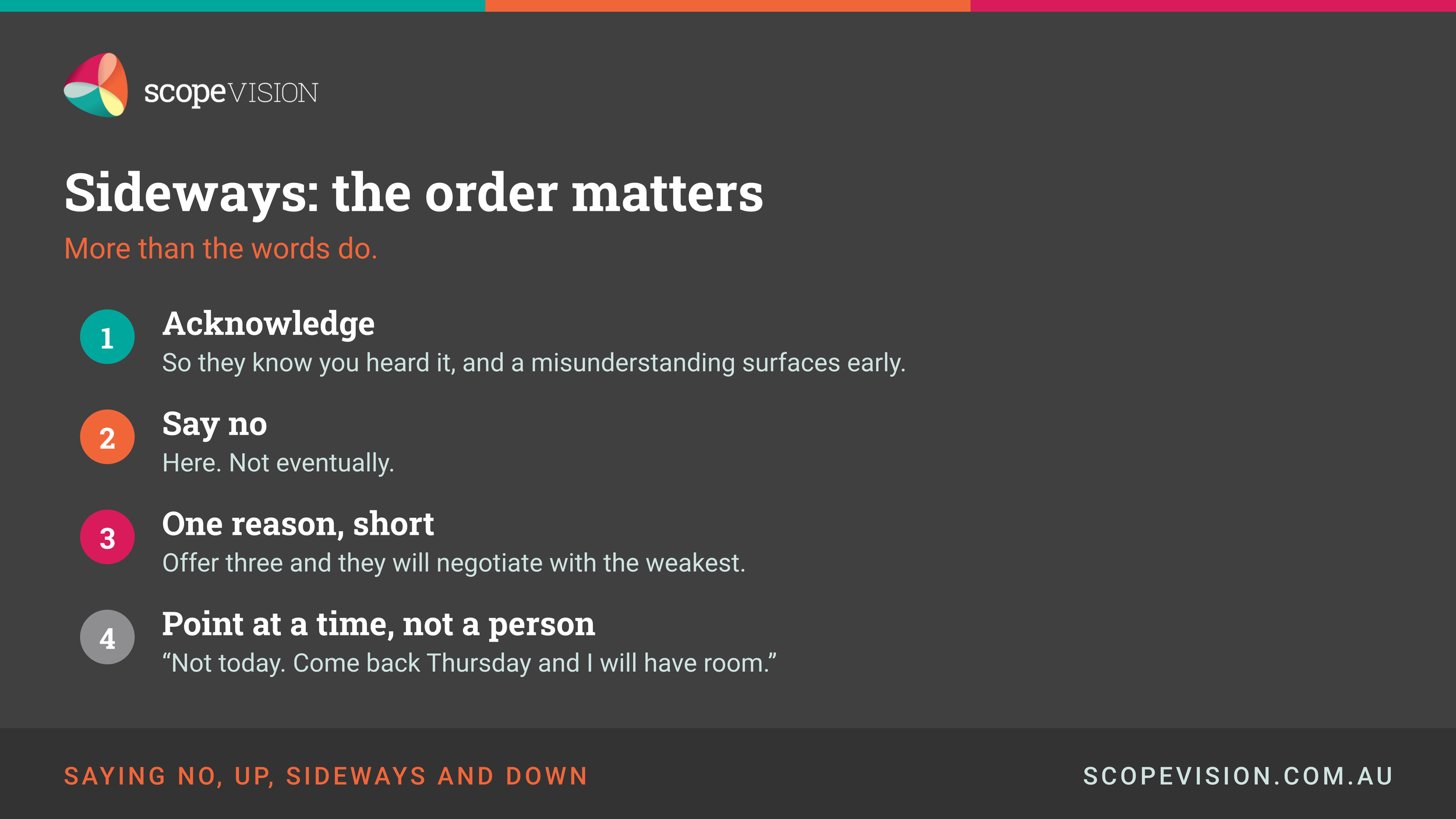
Four steps, and the order matters more than the words.
Acknowledge what they asked, so they know you heard it and so a misunderstanding surfaces early.
Say no. Here, not eventually.
Give one reason, short. One. Offer three and you have handed them a menu; they will negotiate with the weakest.
Then point somewhere useful if you can. Not at a colleague you have not asked, but at a time. “Not today. Come back Thursday and I will have room.”
The order is what people get wrong. Explain first and you invite an argument about the explanation. Decline first and the reason becomes information rather than an opening position.
Down: two very different nos
To your own team member, no lands with weight you did not intend. A quick decline reads as a verdict, and it gets remembered.
But there are two kinds, and leaders treat them the same.
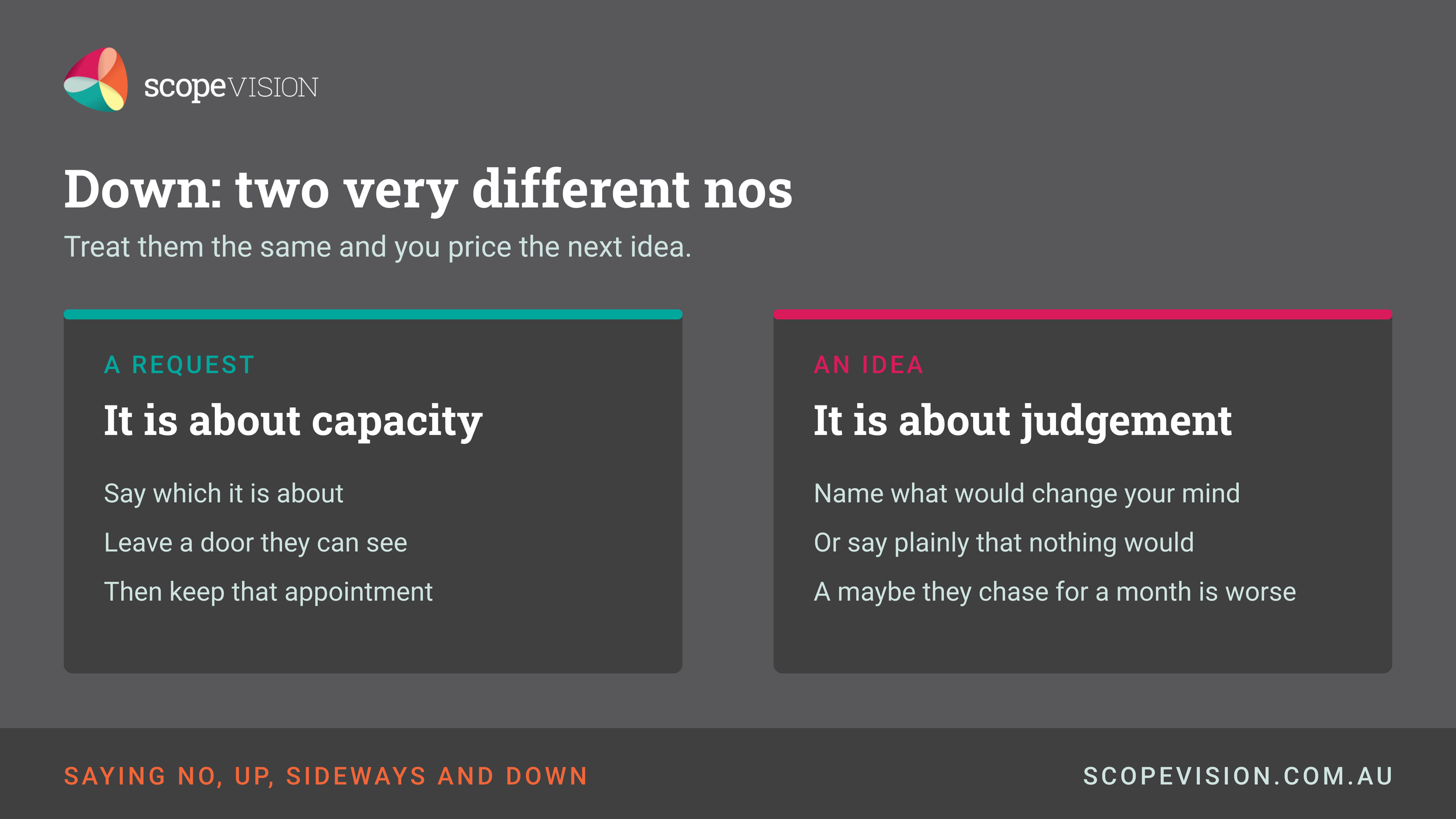
A no to a request is about capacity. They want time, help, a day off, a piece of kit. Say what the no is about, because if you do not say which, they will assume the worst option. And leave a door they can see. Not this quarter. Bring it to the new plan. Then keep that appointment, because a door that never opens teaches the same lesson as a flat refusal, only slower.
A no to an idea is about judgement, and that is the expensive one. They have thought about it, and they are watching your face while you decide. Decline it the way you would decline a request and you have not just said no to this idea. You have priced the next one.
So an idea gets something a request does not: what would change your mind. Not encouragement, not a softener. The actual condition. If you can show me it will not add to the Friday load, bring it back. That is a no they can work with, and it tells them the door is real.
If you cannot name a condition, say that too. This is not a timing problem, it is a no. Honest, and better than a maybe they will chase for a month.
The bill arrives somewhere else
Think about the last thing you took on that you did not have room for. You almost certainly delivered it. It was probably fine. Nobody complained.
The cost did not land there. It landed on the work you did at eleven at night instead, on the fortnight your team had a manager who was in the room but not really there, and on the two things you would have done properly if you had not been doing this one.
None of that shows up anywhere. Nobody raises it, because from the outside you look like somebody who is coping.
That is what a yes costs. Not a disaster. A slow flattening of everything else, and you are the last to see it.
The close
Every yes is a no to something else. That trade happens whether or not you make it consciously.
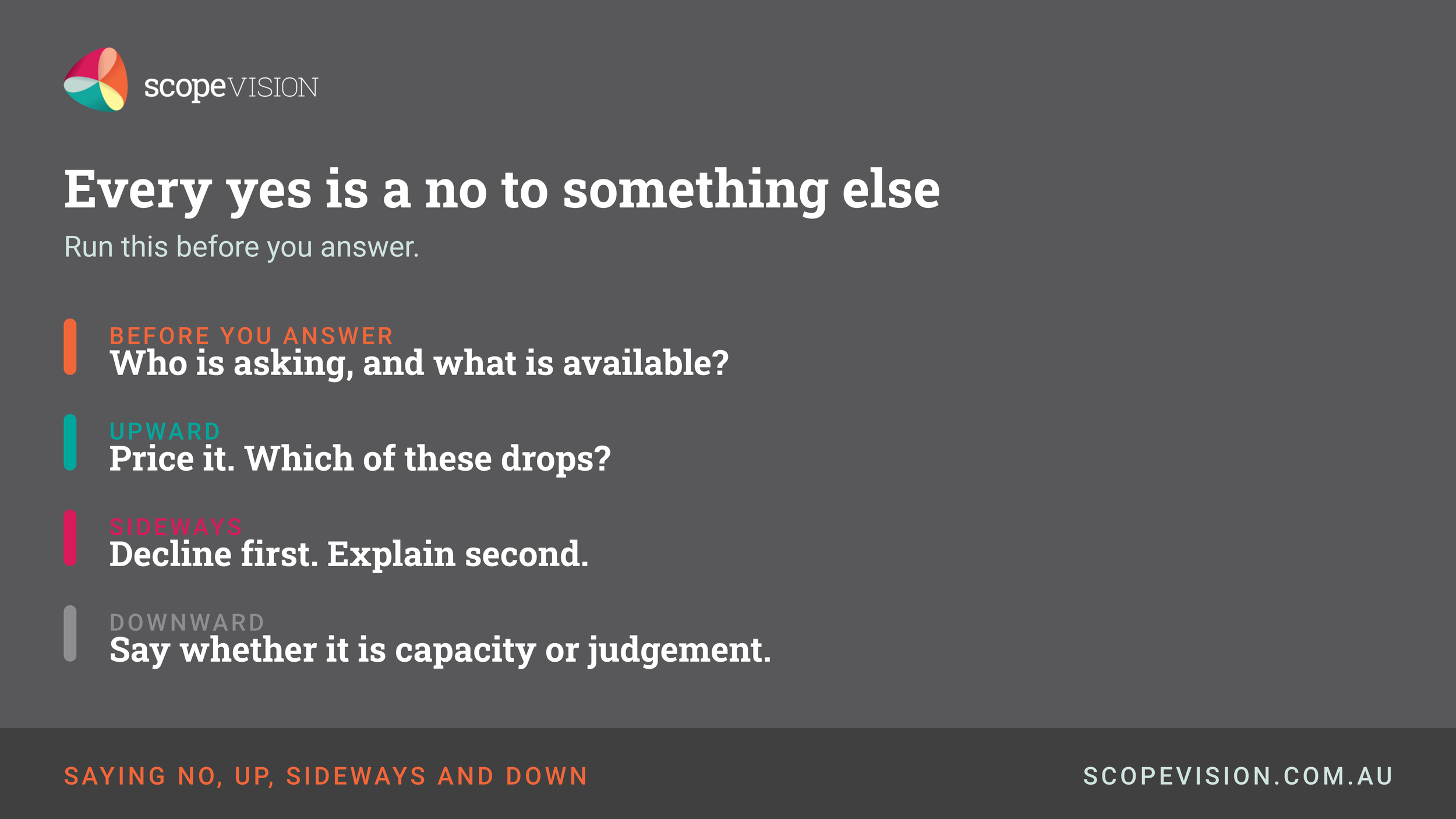
So run the Three Directions before you answer. Who is asking, what is actually available in that direction, and what you are saying no to by saying yes.
The question is not whether you are comfortable saying no. It is whether you know what you said no to on Tuesday, and whether you would have chosen it.
URGENT BEATS IMPORTANT
Half a day on what your team keeps saying yes to.
A working session for leaders whose weeks are full of other people's priorities. What you are actually being asked for, what it costs, and how to price it out loud without it becoming a fight.
Email MJ about the session Use the contact form instead
The first button opens your email app with the questions already in it. If nothing happens when you tap it, your device has no mail app set up, so use the contact form.
Driving results through people is what we do.
Cite this article
Reference list
Satterthwaite, M-J. (2016) Saying no, up, sideways and down. Revised August 2026. Scope Vision. Available at: https://scopevision.com.au/blog/2015/5/7/sometimes-its-good-to-say-no (Accessed: [insert date]).
In text
(Satterthwaite, 2016)
Keep reading
What a yes actually costs, and the PAY approach to deciding before somebody decides for you.
Feedback: An Elephant or a Gift?
The other conversation people rehearse and then get wrong. Whose weight is this?
Freedom Starts Between the Ears
If you cannot say what the week is for, you cannot say what a request is competing with.
For when saying yes has become part of how you present rather than a decision you make.
What did you say yes to
this week?
The like button just below is how I know this helped.
And if someone came to mind while you were reading, send it to them. That is the better compliment.