Here's an uncomfortable truth about most planning sessions: they start with a dying whiteboard marker and someone saying "right, let's SWOT it."
Forty minutes later you've got a wall of Weaknesses and Threats staring back at you like a bad performance review. Everyone's gone quiet. Someone's checked their phone four times. The energy's left the building, people have checked out.
That's not a planning tool doing its job. That's a slow puncture.
SOAR is what you reach for instead and it might just be the best planning tool nobody's got you excited about.
SWOT isn't wrong. It's just tired.
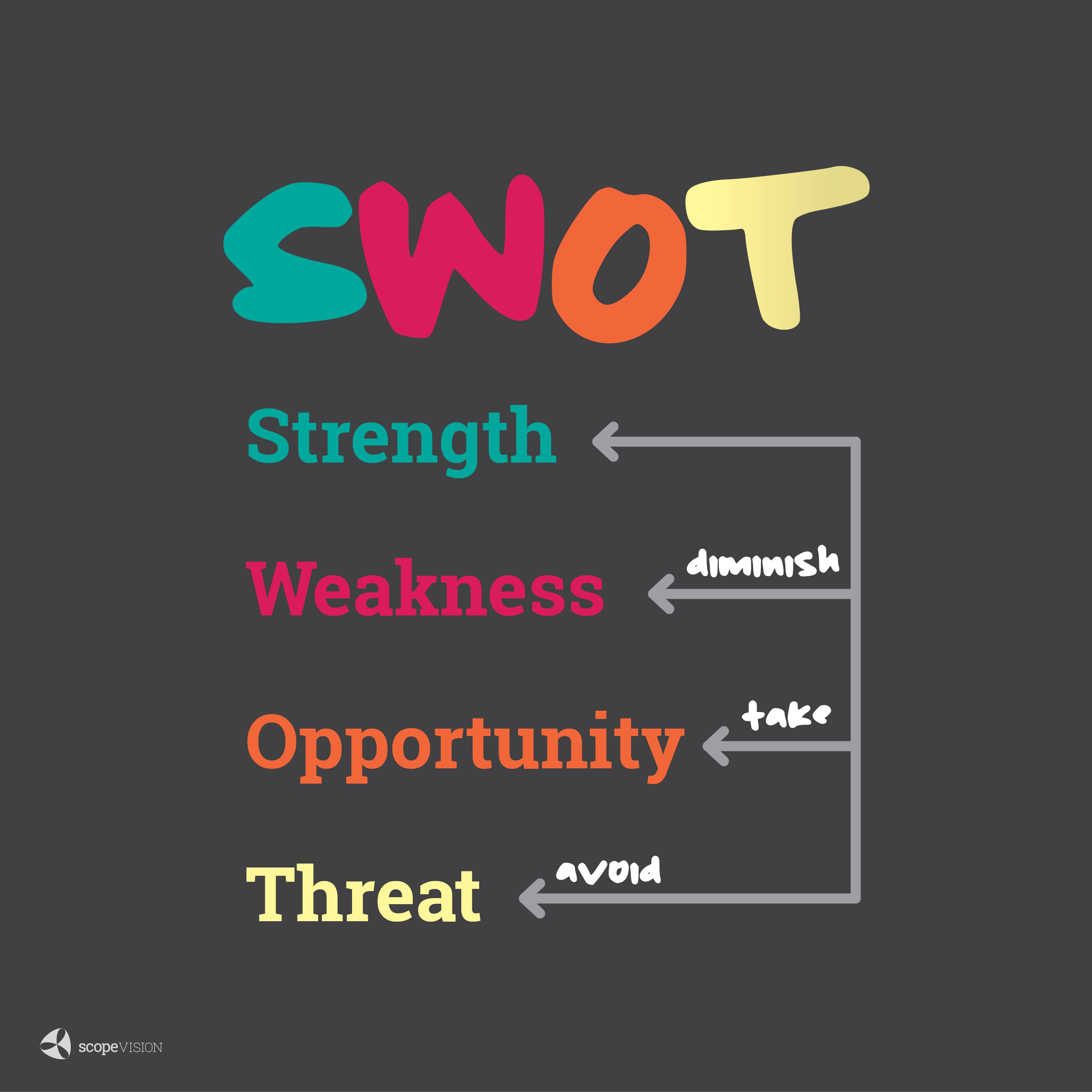
SWOT is an analysis tool. Brilliant for spotting gaps. Less brilliant for getting a room full of switched-on people fired up about the future.
Half of it is dedicated to what's broken — Weaknesses, Threats. Fair enough, you need to know where the exposed cables are. But if that's all you focus on, you train your best people to get really good at spotting problems and average at building exceptional solutions. And around here, average doesn't cut it.
Here's the thing about your teams: they already spend all day thinking about faults, failures and what could go wrong. That's the job, and they're brilliant at it. What they don't get nearly enough of is a proper conversation about what's going right — and where that could take them.
Enter SOAR
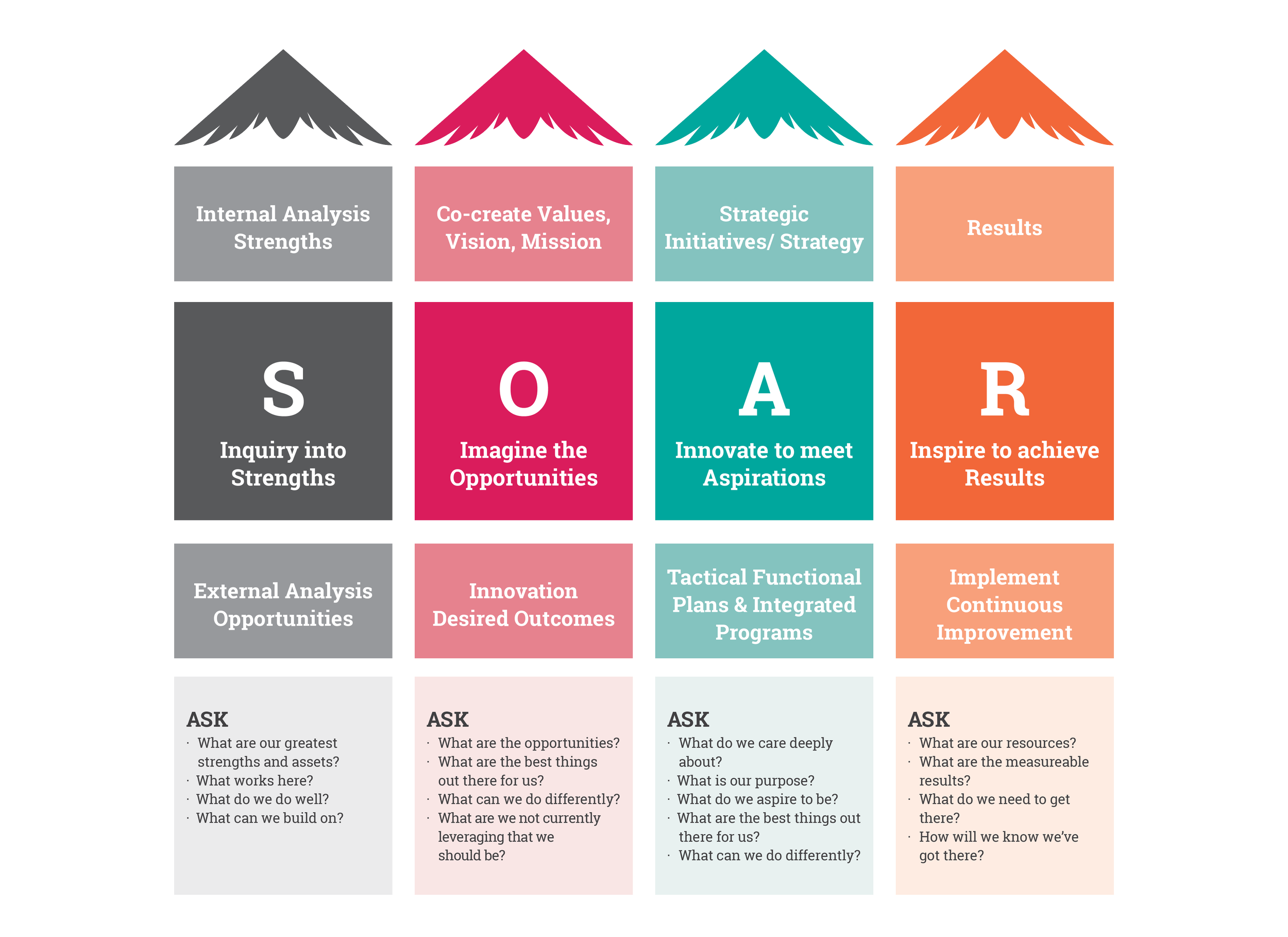
SOAR is a strengths-based planning framework. Same DNA as SWOT, completely different attitude:
● Strengths — what are we exceptional at?
● Opportunities — what big wins are sitting right in front of us?
● Aspirations — what do we want to be famous for?
● Results — what does winning actually look like?
Weaknesses don't vanish — they get reframed inside the Opportunities conversation. "We're bad at X" becomes "here's the gap, and here's what closing it opens up for us." Same issue. Completely different energy in the room.
Strategy researchers Stavros and Hinrichs describe SOAR as a strengths-based approach that brings in the voices of everyone with a stake in the outcome — not just the people at the top of the org chart. That's not corporate fluff. That's the whole point: the people closest to the work usually know exactly what's working. Someone just needs to ask them.
Why this actually matters on the tools
Picture two toolbox talks.
Talk one: "Here's everything that went wrong last month, and here's the audit findings." Everyone nods. Half-listens. Gets back to it.
Talk two: "What did we do this month that we should be doing every month? What's one thing we're sitting on that could make next month easier, safer or faster?" Now people are actually talking — because you've made them the expert on something they're proud of, not the accused in something they didn't cause.
That's the whole engine here. It's called Appreciative Inquiry — a fancy term for a simple idea: people build more, and build better, from what's working than from what's broken. Ask "what's working around here?" and you get engagement. Ask "what's wrong?" and you get compliance, if you're lucky.
SOAR in 5 moves
SOAR runs on a "5-1" approach — five steps, one clear direction:
1. Initiate — make the call to actually use it
2. Inquire — dig into your real strengths
3. Imagine — get honest about the opportunities
4. Innovate — figure out what it'll take to reach your aspirations
5. Inspire to implement — turn all of that into measurable results
Simple on paper. The magic's in doing it properly; right questions, right people in the room, nobody let off the hook on the "Results" bit.
Steal this for your next team meeting
Skip the "what went wrong" agenda item. Open with these four instead:
● What's our proudest win from the last quarter, and what does it say about what we're good at?
● What's one opportunity sitting right in front of us that we haven't picked up yet?
● If we nailed the next 12 months, what would "nailed it" actually look like?
● How will we know we've got there?
Four questions. Twenty minutes. Watch the room change.
Don't just fly
SWOT still has its place; sometimes you genuinely need a hard, clear-eyed look at the threats. But if every planning conversation your team has starts and ends with what's broken, don't be surprised when morale flies about as high as a grounded transformer.
Give your people a framework that asks them to bring their best selves to the table, not just their problems. Strength in, strength out.
Want a copy of the "Don't Just Fly...SOAR" eBook? Email mailbox@scopevision.com.au and I'll send it your way.
If you found value in this, hit the ❤️ and share it with someone who's sat through one too many SWOTs. Be curious. Engage.